New Address: 897 N MacArthur Blvd, Ste 110, Coppell, TX 75019

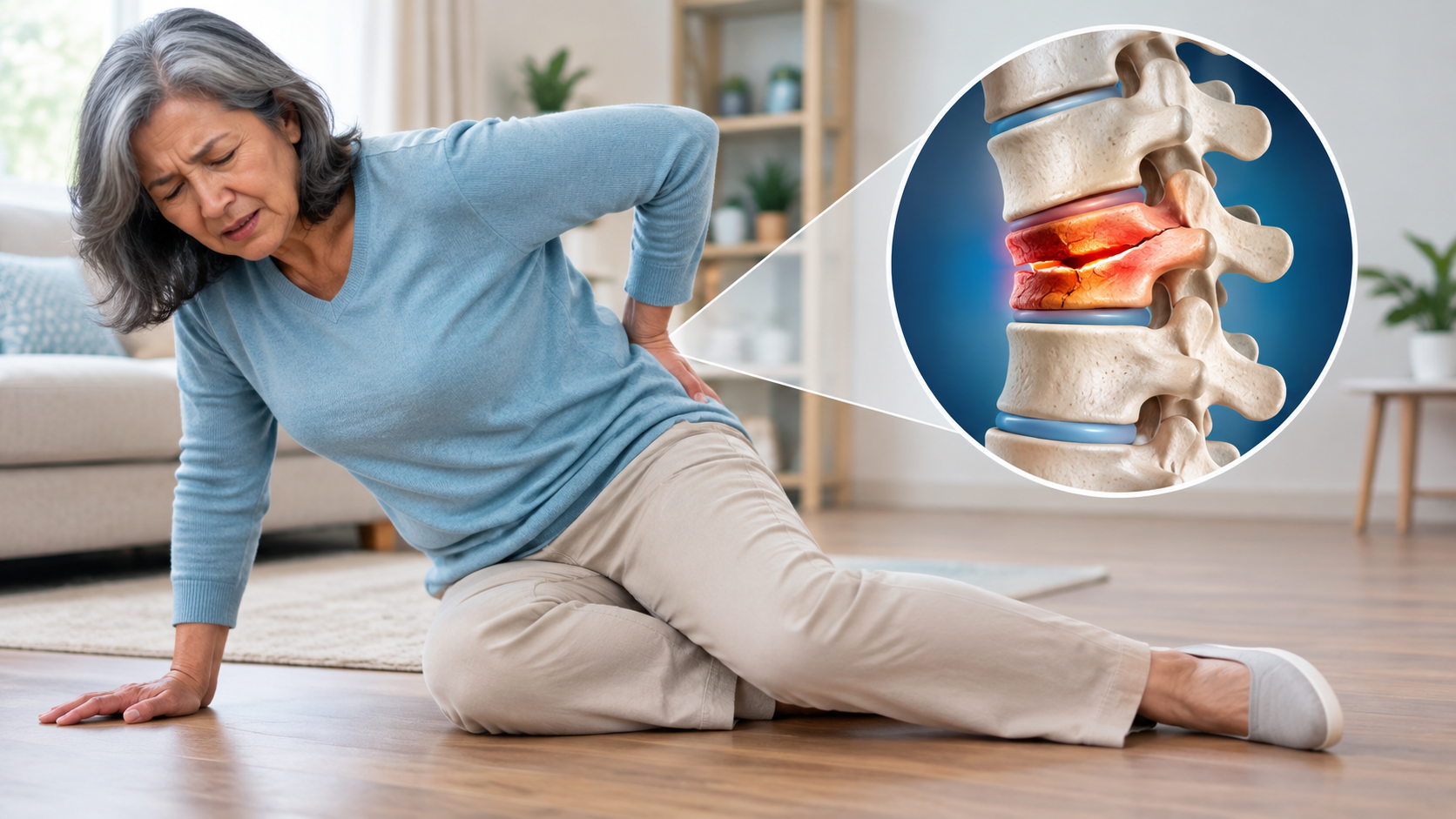



A minor stumble or a fall that seems too small to cause real damage can still lead to sudden, sharp back pain, especially if your bones aren't as strong as they used to be. It's easy to assume this kind of pain is just a strained muscle that will fade in a few days.
Sometimes that's exactly what it is. But a fall that would normally cause little injury can occasionally fracture a weakened vertebra, particularly when osteoporosis or reduced bone strength is involved. Here's how to recognize the signs of a vertebral compression fracture and when back pain after a fall deserves medical evaluation.
The vertebrae are the small bones that stack to form the spine, supporting your body's weight and protecting the spinal cord. Each is built to handle everyday pressure without breaking, but a weakened vertebral body takes far less force to crack or collapse. That's why a fall that seems minor to most people can be enough to cause a fracture in someone with fragile bones.
Osteoporosis, a condition that reduces bone density and strength, is the most common underlying cause. According to the American Academy of Family Physicians, vertebral compression fractures are the most common complication of osteoporosis, with an estimated 700,000 cases occurring in the United States each year.
Trauma from a harder fall or other conditions that affect bone strength can also cause a compression fracture, even without underlying osteoporosis.
A vertebral compression fracture often causes sudden back pain right after a fall or an unusually simple movement, such as bending or lifting something light. The pain is usually localized to the middle or lower back, and standing or walking can make it worse.
Bending or twisting may feel especially difficult, and the area around the fracture is often tender to the touch. In some cases, particularly when the compression progresses or goes untreated, a person may notice gradual height loss or a forward-leaning posture.
Back strain and a vertebral compression fracture can feel similar at first, which is why the difference isn't always obvious without an evaluation.
Back Strain | Possible Compression Fracture |
Often involves muscles or soft tissue | Involves a vertebral bone |
May follow twisting or overuse | May follow a fall or relatively minor stress in weakened bone |
Symptoms often improve progressively | Pain may remain significant, particularly when upright or moving |
Usually no change in vertebral height | Vertebral collapse can contribute to height or posture changes |
*These patterns can overlap, and pain characteristics alone aren't enough to confirm a diagnosis. An examination, often paired with imaging, is the only reliable way to tell the two conditions apart.
Anyone can fracture a vertebra with enough force, but some people are more vulnerable to a fracture from a relatively minor fall, including:
For someone in one of these groups, a fall that a friend or family member might walk away from without injury can be significant enough to cause a fracture.
Not every ache after a stumble needs a same-day medical visit, but certain signs point to the need for prompt evaluation:
Diagnosis usually starts with a conversation about your medical history, including how the fall happened, what your pain feels like, and any history of osteoporosis or bone health concerns. A physical examination follows.
Imaging is typically used to confirm whether a fracture is present and to assess the affected vertebra. Additional evaluation may be recommended if another underlying cause is suspected.
For many patients, initial treatment focuses on conservative options. Depending on the severity of the fracture and individual circumstances, this may include activity modification, pain management, bracing, and physical therapy introduced at the appropriate stage of recovery.
When osteoporosis is a contributing factor, addressing bone health is usually part of the treatment plan as well.
For some patients with a persistent, painful compression fracture that hasn't improved with conservative care, vertebral augmentation may be an option. This minimally invasive procedure, which includes techniques like vertebroplasty and kyphoplasty, stabilizes the fractured vertebra and can help restore some of its height.
Not every compression fracture requires this type of procedure. Your provider can help determine whether it fits your situation based on how the fracture responds to conservative treatment.
A fragility-type fracture, one caused by a fall that shouldn't have led to serious injury, often signals that the underlying bone is weaker than it should be. Treating the fracture addresses today's pain, but not why it happened.
That's why evaluating osteoporosis and other bone health concerns matters just as much as treating the fracture itself, alongside addressing fall-risk factors. The goal is reducing the likelihood of another fracture, not just relieving current pain.
Sudden back pain after a minor fall can sometimes indicate a vertebral compression fracture, especially in people with osteoporosis or weakened bones. Getting an evaluation can help identify the cause of your pain and determine the right treatment approach.
Pay attention to new or worsening back pain, difficulty standing or walking, pain that increases with movement, numbness, tingling, weakness, or changes that affect your daily activities.
Apex Interventional Pain & Spine provides personalized evaluations and treatment options for patients with compression fractures and persistent back pain. Request an appointment to discuss your symptoms and explore appropriate care options.FAQs
Yes, particularly if the bone is already weakened by osteoporosis or another condition that reduces bone density. A fall that wouldn't normally cause injury can be enough to fracture a fragile vertebra.Many people can still walk with a compression fracture, though it's often uncomfortable and pain may worsen with standing or walking. Being able to walk doesn't rule out a fracture.Some compression fractures improve with conservative treatment over time. Others remain painful and may need additional evaluation. A provider can help determine the right approach based on your specific fracture.Recovery time varies depending on the severity of the fracture and the treatment approach. Some patients notice improvement within weeks, while others have more persistent pain that benefits from further evaluation.Kyphoplasty, a type of vertebral augmentation, may be considered for patients with a painful compression fracture that hasn't responded adequately to conservative treatment. Your provider can evaluate whether it's appropriate for your situation.