New Address: 897 N MacArthur Blvd, Ste 110, Coppell, TX 75019

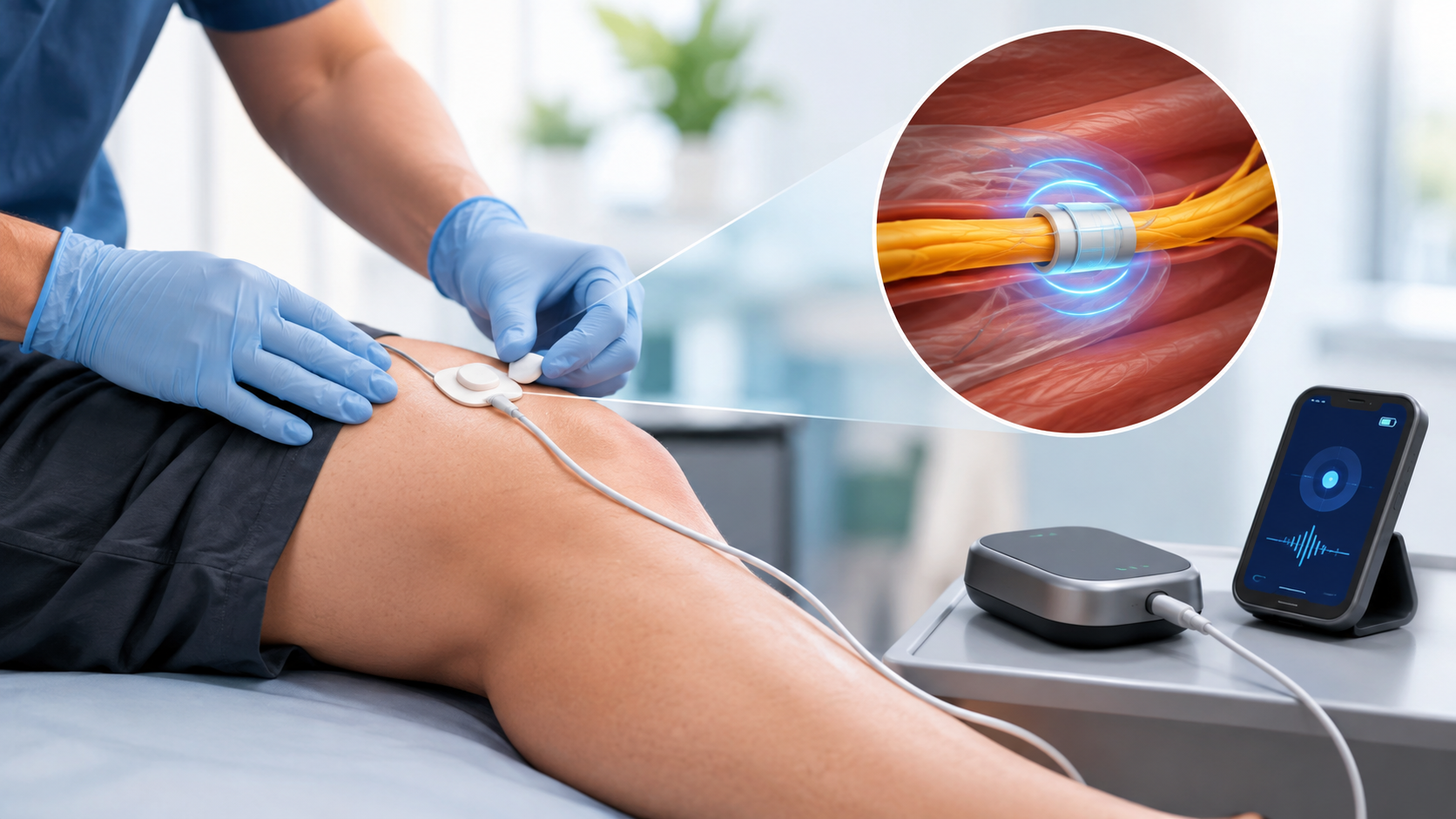



If you've tried physical therapy, medication, and other conservative treatments for persistent nerve pain without lasting relief, you may be looking for other options. Nerve-related pain, whether it's burning, tingling, or a sharp ache that won't let up, can be especially hard to manage because it doesn't always respond well to standard approaches.
Peripheral nerve stimulation (PNS) works differently. Instead of relying on medication alone, it uses targeted electrical stimulation to change how a specific nerve sends pain signals. Here's how the peripheral nerve stimulation procedure works, what happens during treatment, and what to expect afterward.
Peripheral nerves are the network of nerves outside the brain and spinal cord. They carry sensory signals, including pain, from the body to the central nervous system. When a nerve is irritated, damaged, or overactive, it can send pain signals more often or more intensely than it should.
A peripheral nerve stimulator works by delivering small electrical impulses near the affected nerve. These impulses change how the nerve transmits its signals, which may reduce the pain a person feels.
The system has two main parts: a thin lead, or electrode, placed near the nerve, and a small stimulator or pulse generator that powers it.
It helps to understand how this differs from spinal cord stimulation. With PNS, the target is a specific peripheral nerve involved in the pain. Spinal cord stimulation targets the spinal cord itself, affecting a broader area. Your provider will determine which approach fits your situation.
Peripheral nerve stimulation is generally considered for persistent neuropathic or nerve-related pain that hasn't responded adequately to conservative treatment, such as medication, physical therapy, or other pain management options.
Depending on the nerve involved and the cause of the pain, PNS may be an option for:
Before recommending peripheral nerve stimulation, your provider will review your medical history and any pain treatments you've already tried. This helps confirm that more conservative options have been reasonably explored.
A physical examination follows, focused on identifying the specific nerve believed to be contributing to your pain. In some cases, additional diagnostic testing or imaging may support this evaluation.
Your provider will also discuss your treatment goals and what to realistically expect from PNS. Any procedure-specific preparation, such as instructions about food, medication, or arrival time, will be explained ahead of your appointment.
The first step is identifying the nerve associated with your pain. Precise placement matters, since the stimulation needs to reach the right nerve to be effective.
Once the nerve is located, your provider uses a local anesthetic to numb the area. A small lead, or electrode, is then positioned near the selected peripheral nerve, typically guided by imaging for accuracy.
The lead is connected to the stimulator, and settings are adjusted based on how you respond. Because peripheral nerve stimulation systems vary, the exact programming process can differ depending on the device your provider uses.
When the stimulation is activated, many patients notice a mild tingling or tapping sensation in the area near the treated nerve, rather than pain. Some describe it as a gentle buzzing or pulsing feeling.
Every nerve and every patient responds a little differently, so what one person feels may not match another person's experience. That's part of why programming is adjusted based on how you respond during testing.
If the sensation feels too strong, too weak, or simply uncomfortable, your provider can modify the settings so the stimulation is both tolerable and effective for your pain pattern.
Peripheral nerve stimulation is typically done on an outpatient basis, meaning most patients go home the same day. Recovery expectations can vary depending on the specific PNS system used and the details of your procedure.
In general, patients are asked to:
Your provider will let you know when you can safely resume normal activities based on how your recovery is progressing.
Peripheral nerve stimulation can be a treatment option for certain types of persistent nerve-related pain when other conservative approaches have not provided enough relief. Understanding the source of your pain and how it affects your daily life is an important part of determining whether PNS may be appropriate.
Pay attention to ongoing burning, tingling, sharp pain, or discomfort that continues despite medications, physical therapy, or other treatments.
Apex Interventional Pain & Spine provides personalized evaluations and peripheral nerve stimulation treatment options for patients with persistent nerve-related pain.
Request an appointment to discuss your symptoms and explore appropriate pain management options.FAQs
Not necessarily. Some systems are designed for short-term or trial use, while others may be used longer term depending on how well they control pain. Your provider can explain the options available for your situation.Many patients notice a mild tingling or tapping sensation when the device is active, though the intensity and type of sensation can vary. Settings can be adjusted to make it more comfortable.This varies by patient and by the specific system used. Most people resume light activities fairly quickly but should avoid strenuous movement until their provider confirms it's safe.No. A nerve block injection delivers medication to temporarily interrupt pain signals, while PNS uses an implanted lead and ongoing electrical stimulation to modify how the nerve transmits pain over time.PNS targets a specific peripheral nerve involved in the pain, while spinal cord stimulation targets the spinal cord itself to affect a broader area. Your provider can help determine which approach fits your pain pattern.